Understanding Roofing Safety Standards: A Practical Guide for Homeowners and Contractors
@roofingsafetystandardsspark
October 13, 2026 · 7 min read
Why Roofing Safety Matters More Than Ever
Roof work is one of the most dangerous jobs in construction. Every year, workers suffer serious injuries or worse from falls off roofs, through fragile surfaces, or from ladders that shift unexpectedly. The statistics from the Health and Safety Executive make grim reading: Falls from height remain the single biggest cause of workplace fatalities in UK construction. And it is not just the workers who are at risk. A poorly secured roof or a contractor who cuts corners on safety can put homeowners, passers-by, and even the structure itself in danger.
That is why staying up to date with roofing safety standards is not just a legal box to tick. It is a fundamental part of doing the job properly. For homeowners in Bearsden and across Scotland, knowing what those standards mean can help you choose a roofing contractor who takes safety seriously. For roofers, following these rules is what separates a professional job from a cowboy operation.
The Legal Backbone: Working at Height Regulations
The cornerstone of all roof work safety in the UK is the Working at Height Regulations 2005. These regulations place a clear duty on employers, self-employed contractors, and even homeowners who commission work. The key principle is simple: work at height must be properly planned, supervised, and carried out by competent people. The regulations do not ban ladders or working at height. They insist that you use the right equipment for the job and take sensible precautions to prevent falls.
For a roofing contractor, this means carrying out a risk assessment before any job starts. It means deciding whether scaffolding is needed or whether a tower scaffold or mobile access platform will do. It also means thinking about the roof surface itself. Old asbestos cement sheets, rotted timber, or corroded metal can give way without warning. A good contractor will never assume a roof is safe to walk on just because it looks solid from the ground.
Personal Protective Equipment and Safety Harnesses
Personal protective equipment, or PPE, is a visible sign of a safety-conscious roofer. Hard hats, safety glasses, gloves, and sturdy boots are the basics. But for roof work, the most critical piece of PPE is the safety harness. A properly fitted safety harness connected to a secure roof anchor point can stop a fall from turning into a tragedy.
The catch is that a harness only works if it is attached to something strong enough to hold it. Roof anchor points must be installed correctly, and they must be tested and inspected regularly. Many modern roofs have permanent anchor points fitted during construction, but older properties often need temporary ones. A roofer who turns up without any anchor points or harnesses should raise a red flag. The same goes for a contractor who relies on a single ladder without any edge protection or guardrails at the top.
Scaffolding, Ladders, and Edge Protection
Scaffolding hire is a common part of major roofing jobs, especially for sloped roofs or two-storey houses. Proper scaffolding provides a stable working platform and allows roofers to move safely around the building. It also protects the property and anyone walking below. For smaller jobs, a ladder might be enough, but ladder safety is about more than just leaning it against the wall. The ladder needs to be on firm, level ground, secured at the top and bottom, and extended at least one metre above the landing point. The three-point contact rule - keeping both feet and one hand on the ladder at all times - is drilled into every trained roofer.
Edge protection is another essential. Guardrails and toe boards around the perimeter of the roof reduce the chance of someone stepping off the edge. On flat roofs, edge protection is often mandatory. On pitched roofs, it may be combined with a safety line and harness. The balance between different types of protection depends on the roof design, the weather, and the experience of the team. There is no one-size-fits-all answer, which is why good judgment matters as much as good equipment.
British Standards and Industry Guidance
Beyond the regulations, several British Standards set the benchmark for safe roof work. BS 5531 is the standard for scaffolding on domestic and commercial buildings. It covers everything from materials and assembly to inspection and loading. A roofer who follows BS 5531 is showing a commitment to quality that goes beyond the legal minimum.
Industry bodies like the Tile Roofing Advisory Council, or TRAC, provide guidance on best practice for tiled and slated roofs. TRAC publishes technical notes on fixing tiles, ventilation, and safe working methods. Roofers who engage with TRAC and similar organisations tend to stay ahead of changes in roofing safety standards. They also value CPD, or Continuing Professional Development. Attending courses, workshops, and site safety briefings keeps their knowledge fresh. A roofer who can show evidence of recent CPD is usually a safer bet than one who has not updated their skills in years.
RIDDOR and Reporting Accidents
Any serious injury or dangerous occurrence on a construction site must be reported to the Health and Safety Executive under RIDDOR, the Reporting of Injuries, Diseases and Dangerous Occurrences Regulations 2013. This reporting system helps the HSE spot patterns and target inspections where they are needed most. For a roofing company, having a clear RIDDOR record is a mark of a safe workplace. It also encourages transparency. When accidents do happen, honest reporting helps everyone learn from them.
Falls from height are the most common RIDDOR reportable event in roofing. Others include injuries from manual handling, such as lifting heavy tiles or rolls of felt, and incidents involving site clearance, where debris or tools left lying around cause trips and falls. Good housekeeping on a roof site is not just tidy. It is a direct part of safety.
Roofing Company Insurance and Competence
Even the best safety practices cannot eliminate every risk. That is why roofing company insurance is a must. Public liability insurance covers damage to the property or injury to a third party. Employers' liability insurance is a legal requirement if the contractor employs anyone. Professional indemnity insurance covers design or advice errors. Homeowners should always ask to see proof of insurance before work starts. A roofer who hesitates or cannot produce it is not worth the risk.
Competence goes hand in hand with insurance. A competent roofer is not just someone who has been doing the job for years. They have formal training, relevant qualifications, and a track record of following roofing safety standards. Bearsden roofers who are members of recognised trade associations or who hold CSCS cards demonstrate a baseline of competence. They also tend to invest in better equipment and ongoing training.
Practical Steps for Homeowners
If you are hiring a roofing contractor, you do not need to become a safety expert. But a few questions can tell you a lot. Ask about their risk assessment for your specific job. Ask what edge protection they plan to use. Ask about their experience with your type of roof. A good contractor will be happy to talk through their safety measures. A bad one will try to brush you off or make you feel foolish for asking.
Also, trust your instincts. If a roofer turns up in a battered van with no safety signage, no hard hat, and a single extension ladder, think twice. The cheapest quote is rarely the safest one. Spending a bit more on a contractor who values safety can save you far more in the long run, both in repair bills and in peace of mind.
The Bigger Picture: Roofing UK
Across the UK, the roofing industry is working hard to improve its safety record. Organisations like Roofing UK promote good practice and provide resources for contractors and homeowners alike. The message is consistent: safe roofs are built by skilled people using the right equipment and following proven methods. Tile cutting, for example, creates sharp edges and silica dust. A safe roofer uses a dust mask, guards the blade, and clears waste properly. Manual handling of heavy materials is done with mechanical aids or team lifting, never alone.
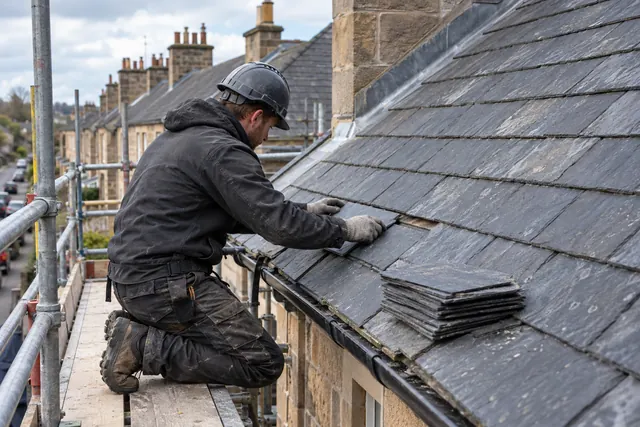
Site clearance at the end of each day is another small but vital habit. Leftover tiles, nails, and packaging create trip hazards and can be blown off the roof by wind. A tidy site is a safer site. It also shows respect for the homeowner's property.
Final Thoughts
Roofing safety standards are not a static set of rules. They evolve as new equipment, materials, and techniques emerge. What was considered safe ten years ago may not meet today's expectations. For contractors, staying current is part of the job. For homeowners, understanding the basics helps you make informed choices. Whether you need a simple repair or a full roof replacement, choosing a roofer who lives by those standards is the best decision you can make. It protects everyone involved, and it ensures the job is done right.